
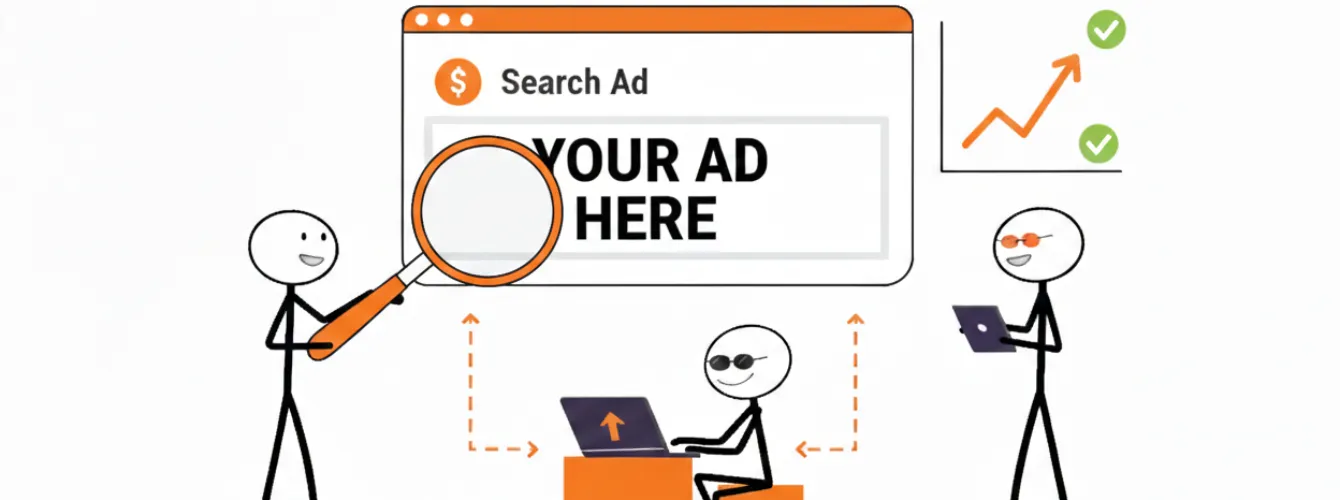
PPC marketing stands for “Pay-per-click marketing” which means handling and optimizing online ads where a business pays money each time someone clicks on its ad. The goal is to bring the right people to the website and increase sales or leads.
According to Google in 2026, PPC marketing will likely use smart AI to improve targeting, create highly personalized ads, and improve performance across different platforms. It will also focus on understanding user needs and analyzing data to achieve the best results.
Keeping an eye on your campaigns and making small changes ensures better results and higher Returns On Investment (ROI). For businesses aiming to grow their online presence and boost sales, PPC marketing is the ultimate tool to turn clicks into customers. Pay-per-click marketing is key for businesses looking to grow their online presence and sell more.
How does PPC marketing work?
Establish a budget that aligns with your goals and decide how much you’re willing to pay for each click to balance cost and performance effectively. PPC Marketing Services, helps you allocate your budget wisely, ensuring maximum ROI.
Create high-converting ad copy and landing pages to enhance engagement. Set up a well-structured campaign that targets the right audience. Monitor performance closely, making data-driven adjustments to maximize results.
5 Essential Steps of PPC marketing
Keyword Research
Keyword research is the process of finding and analyzing relevant search terms (words) that people use on online platforms. By choosing the right keywords and optimizing them effectively, you can improve conversions and maximize your return on ad spend (ROAS).
Choosing the Right Platforms
To choose the best PPC platforms for your strategy, consider your target audience, campaign goals, and where your audience spends their time. Popular options include Google Ads for, LinkedIn Ads, Meta Ads, Bing Ads, Microsoft Ads, and Twitter Ads. Align your platform choices with your audience’s habits and campaign objectives for maximum impact.
Ad Monitoring and Reporting
Ad monitoring and reporting in PPC involve continuously tracking key metrics to evaluate campaign performance. By analyzing KPIs, advertisers can identify areas for improvement and make data-driven decisions. This process helps optimize strategies, enhance conversions, and maximize ROI.
Optimizing Ad Spend
Focus your budget on high-converting keywords and audience segments to maximize ROI in PPC. Use data insights to refine targeting, adjust bids, and optimize ad placements. This strategic approach ensures efficient spending and higher returns.
Split Testing
Split testing, or A/B testing, in PPC involves comparing two versions of an ad element to see which performs better. By testing variations in ad copy, CTAs or landing pages, marketers can optimize for higher engagement and conversions. This data-driven approach helps maximize ROI and improve campaign effectiveness.
The Purpose of PPC marketing
The purpose of PPC (Pay-Per-Click) marketing is to ensure that a company’s paid advertising campaigns drive the right traffic while maximizing returns. It focuses on selecting high-intent keywords, targeting the right audience and optimizing bids to improve ad performance.
By continuously monitoring and refining campaigns, PPC marketing helps businesses control costs, increase conversions, and get the most value from their ad spend. The goal is to make every click count, leading to better visibility, higher engagement, and a stronger return on investment (ROI).
Effective PPC marketing requires ongoing tweaks and improvements, such as fine-tuning ad copy, adjusting bid strategies, and selecting the best platforms for your audience. This consistent optimization helps your campaigns perform at their peak, ensuring you get the most out of your advertising budget and turning potential leads into loyal customers.
Why PPC Works for Businesses
PPC (Pay-Per-Click) advertising provides businesses with an immediate advantage, connecting them with customers who are actively searching for their solutions. Unlike traditional advertising methods that often waste money on broad, uninterested audiences, PPC ensures your budget is used efficiently, you only pay when someone genuinely engages with your ads.
Businesses use PPC marketing services to get the best results from their ads. These services help refine strategies, optimize ad spending, and improve overall campaign performance. They assist in identifying the best keywords, fine-tuning targeting, and increasing conversion rates, all of which contribute to long-term success.
When your business consistently ranks at the top of search results, customers begin to see you as a trusted leader in your industry. If your goals include building credibility, driving growth, and boosting profitability, PPC is a smart and effective investment that delivers real results.
Tips for Successful PPC Campaigns
To ensure a successful PPC campaign, focus on strategies that drive results and build trust with your audience.
- Stop losing leads to a disconnected experience. Design landing pages that directly reflect your ad’s promise. A seamless transition from click to page builds instant trust, lowers bounce rates and skyrockets your conversion potential.
- Don’t fly blind. Define exactly what success looks like, whether it’s raw sales, fresh leads or brand visibility. Clear KPIs (Key Performance Indicators) allow you to stop guessing and start scaling what actually works.
- Treat your campaigns as living projects. Regularly audit your CTR (Click-Through Rate) and conversion data. Be ruthless: refine your targeting, A/B test your headlines and cut the underperforming fat to maximize your ROI.
- Digital marketing isn’t a “set it and forget it” game. Align your strategy with Google’s E-E-A-T (Experience, Expertise, Authoritativeness and Trustworthiness) by staying ahead of market trends. Adapt to customer behavior to ensure sustainable, long-term growth.
Conclusion
For digital businesses, PPC is the key to growth and getting the right customers to your website. Done well, it can generate high-quality leads and get the most out of your ad spend.
But if you’re new to PPC, it’s easy to make costly mistakes without a clear strategy. Using PPC marketing tools can help you find the right keywords, track performance and optimize as you learn the ropes.
And you’d rather skip the trial and error, outsource to an experienced digital marketing agency and get a fast track to success and get your budget working best for you.
While PPC is a powerful tool for achieving short-term success, its true value comes from regular improvements that deliver sustained growth and long-term results.